
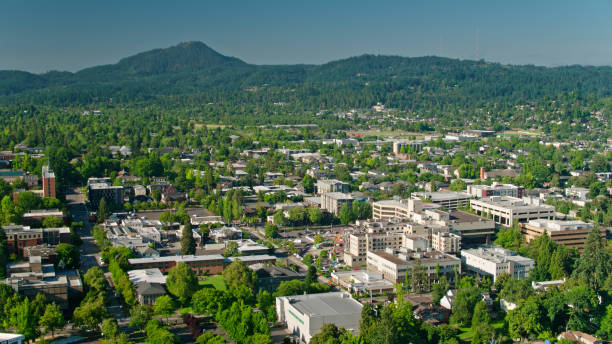
Disciplined investors do well in markets where fundamentals matter more than hype.
Investing in Eugene, Oregon Commercial Real Estate in 2026: A Strategic Window for Smart Investors
If Portland is where the headlines are made, Eugene is where disciplined investors quietly build wealth.
In 2026, Eugene is not overheated. It is not collapsing either. It is a secondary market in transition, and that is exactly why smart investors should be paying attention.
When markets get noisy, I like places where fundamentals still matter. Eugene is one of those places. It is not a market that rewards lazy underwriting or blind optimism. It is a market that rewards patience, operational skill, and buying the right asset from the right seller.
A Different Kind of Opportunity Than Portland
Eugene moves to its own rhythm.
- Smaller deal sizes
- Less institutional competition
- More owner-operated properties
- More opportunities created by inefficiency than by hype
That matters in 2026. In a market where debt is more expensive and mistakes get punished faster, smaller and more local markets can offer better entry points than the big-city bidding wars investors got used to in the last cycle.
Eugene is not the place to chase a story. It is the place to execute a plan.
In Eugene, the best multifamily deals often come from better operations, not speculation.
The 2026 Eugene Backdrop
Eugene’s commercial real estate market is being shaped by the same broad forces affecting the rest of Oregon, but with a local twist.
- Interest rates remain elevated compared with the easy-money years
- Lenders are still cautious
- Smaller operators are feeling pressure
- Housing demand remains durable
- Education, health care, and local services continue to anchor the economy
The City of Eugene says the market needs nearly 26,000 additional homes over the next 20 years. That is a meaningful indicator for investors because it speaks directly to long-term housing demand. This is not a market with no need for product. It is a market with a persistent need for well-run product.
Lane County’s January 2026 unemployment rate was 5.3%, up from 4.5% a year earlier, and total nonfarm employment was down 1.1% year over year. That is not a collapse, but it does tell us the market is feeling pressure. Pressure creates motivated sellers. Motivated sellers create opportunity.
At the same time, Lane County is projected to add 10,900 jobs between 2024 and 2034, a 6% increase. That is exactly the kind of long-view data I like. Near-term stress. Long-term viability.
Why Eugene Still Works as an Investment Market
The University of Oregon remains one of Eugene’s core economic engines. Fall 2025 enrollment came in at 24,448 students. That is important not just for student housing, but for surrounding retail, services, medical demand, and investor confidence in the city’s staying power.
Eugene is not dependent on one shiny trend. It benefits from several durable demand drivers working together:
- University-related demand
- Health care employment
- Local and regional service businesses
- A steady renter base
That is why I view Eugene in 2026 as a selective opportunity market. It is not a market where everything works. It is a market where the right assets can work very well.
Flex and industrial space in secondary markets can offer steady income when bought with discipline.
Asset Class Breakdown: Where I Would Focus
Multifamily: Still the Core Play
If I am looking at Eugene in 2026, multifamily is still where I start.
Not because every apartment deal is good. They are not. But because Eugene still has a real need for housing, and because smaller multifamily properties in secondary markets are often owned by people who have not pushed rents, have not tightened expenses, or have simply grown tired of active ownership.
That creates the kind of opportunity I like best: value created through better operations.
- 10 to 50 units can be a strong target range
- Look for below-market rents
- Look for weak expense control
- Look for deferred maintenance you can quantify and solve
In this market, operational upside matters more than fantasy appreciation.
Industrial and Flex: Quiet Strength
Eugene’s industrial and flex properties are not glamorous, and that is part of the appeal.
Local businesses still need service bays, warehouse space, fabrication space, and practical buildings with parking and access. In a market like this, basic functionality is a strength.
You may not steal these assets, but if you buy them right, they can provide the kind of predictable income investors appreciate when the broader market is uncertain.
Office: Only with a Clear Plan
Office in Eugene may hold up better than some large urban cores, but I still would not drift into it casually.
Hybrid work changed demand. Older office properties with weak layouts or tired finishes can become long-term problems instead of opportunities.
If you are buying office in 2026, you should be able to answer three questions clearly:
- Why this location?
- Why this building?
- Why will tenants choose it over the competition?
If you cannot answer those questions quickly and convincingly, keep moving.
Retail: Neighborhood and Necessity Win
Retail in Eugene is a micro-location game.
The strongest plays tend to be neighborhood-oriented, service-based, and tied to daily-use demand. Food, medical-adjacent uses, convenience, and personal services generally make more sense than trend-chasing concepts.
Good retail in Eugene is not about flash. It is about relevance.
In Eugene retail, micro-location and tenant quality matter more than broad trends.
The Real Opportunity in 2026
The opportunity in Eugene right now is not finding some mythical perfect property.
It is finding properties where better ownership will materially improve performance.
- Owners facing refinancing pressure
- Tired landlords
- Properties with under-market rents
- Assets with weak management
- Buildings that need a practical, not heroic, repositioning plan
That is the kind of deal environment disciplined investors should like. Not because it is easy, but because it is understandable.
Financing Will Still Make or Break the Deal
In 2026, debt remains a major filter.
- Lower leverage than many buyers want
- Stricter underwriting
- More lender scrutiny on secondary markets and smaller assets
That means strong lender relationships matter. More equity matters. Deal structure matters. Buyers who need perfect financing to make a deal work are going to have a hard time.
My advice is simple: underwrite conservatively and leave room for reality.
How to Win in Eugene
If you want to invest in Eugene commercial real estate in 2026, I would focus on four things.
- Focus on cash flow first. Appreciation is welcome, but it should not be your only plan.
- Target inefficiency. The best value often comes from improving operations, not from predicting the future.
- Be selective by asset class. Multifamily and practical industrial assets deserve the most attention. Office requires caution. Retail requires micro-market understanding.
- Plan to hold. This is not the kind of market where short-term heroics should be your strategy.
Final Thought
Eugene in 2026 is not flashy. That is one of its strengths.
While other investors chase the loudest market, disciplined buyers can still find real opportunity here by buying well, operating better, and holding long enough to let the fundamentals work in their favor.
This is not a market for guessing. It is a market for strategy…and cash is king here more than ever!
Rick Bean
Rose City Commercial Real Estate
Frequently Asked Questions
Is Eugene, Oregon a good place to invest in commercial real estate in 2026?
Yes, but only for disciplined investors. Eugene is not a market where you can buy anything and expect it to work. What makes it attractive in 2026 is the combination of steady demand drivers—like the University of Oregon, healthcare, and local services—paired with less competition than larger markets like Portland.
The real opportunity comes from buying properties with operational upside. That might mean below-market rents, inefficient management, or deferred maintenance that can be corrected. If you focus on cash flow and long-term hold strategy, Eugene can be a very solid market.
What types of commercial properties perform best in Eugene?
Multifamily is still the most reliable asset class in Eugene because housing demand remains consistent and supply is constrained. Smaller apartment properties—typically in the 10 to 50 unit range—often provide the best combination of price point and upside potential.
Industrial and flex properties are also strong performers because they serve local businesses and tend to have stable tenant demand. Retail can work well in neighborhood locations with service-based tenants. Office properties require a much more selective approach and should only be considered when there is a clear plan for leasing and positioning the asset.
What is the biggest risk when investing in Eugene commercial real estate?
The biggest risk is overpaying based on unrealistic assumptions. In today’s market, higher interest rates and tighter lending mean that deals need to work based on current income, not projected upside alone.
Investors get into trouble when they assume rents will rise quickly, vacancies will stay low, or financing will remain easy. A more conservative approach is required in 2026. Underwrite with higher vacancy, realistic rent growth, and adequate reserves. If the deal still works under those conditions, you are in a much stronger position.
In short, the risk is not the market—it’s the assumptions behind the deal.